Fort Myers Startup Costs Deduction Guide for 2026
You're launching a business in Fort Myers. Excitement builds as you pay for market research or legal fees to form your LLC. Then reality hits. Those costs add up fast, and you wonder how to get tax relief.
The good news? You can deduct many Fort Myers startup costs right away. IRS rules let new owners offset up to $5,000 in the first year. But limits apply, and mistakes cost money. This guide breaks it down with examples tailored to Southwest Florida entrepreneurs.
We'll cover what qualifies, key differences from other expenses, and steps to claim your deduction. Let's get your new venture off to a smart tax start.
What Counts as Startup Costs?
Startup costs cover expenses you pay before your business opens. Think investigation and setup phases. These happen while you test ideas but haven't sold anything yet.
Common examples include market research to gauge demand for your Fort Myers coffee shop. Or training staff on equipment. Travel to meet suppliers counts too. Employee wages during this pre-open time qualify as well.
Legal fees for entity formation fit here, like drafting your operating agreement. Permits and licenses often do too, especially initial ones. But equipment buys? Those usually shift to another category.
Organizational costs overlap a bit. They focus on creating the business entity. State filing fees for your LLC or S corp count. Accountant fees to set up your structure also qualify.
Keep receipts. The IRS wants proof. For instance, if you spend $3,000 on a feasibility study for a beachside rental service, that deducts easily.

In short, track every pre-business dollar spent. It pays off at tax time.
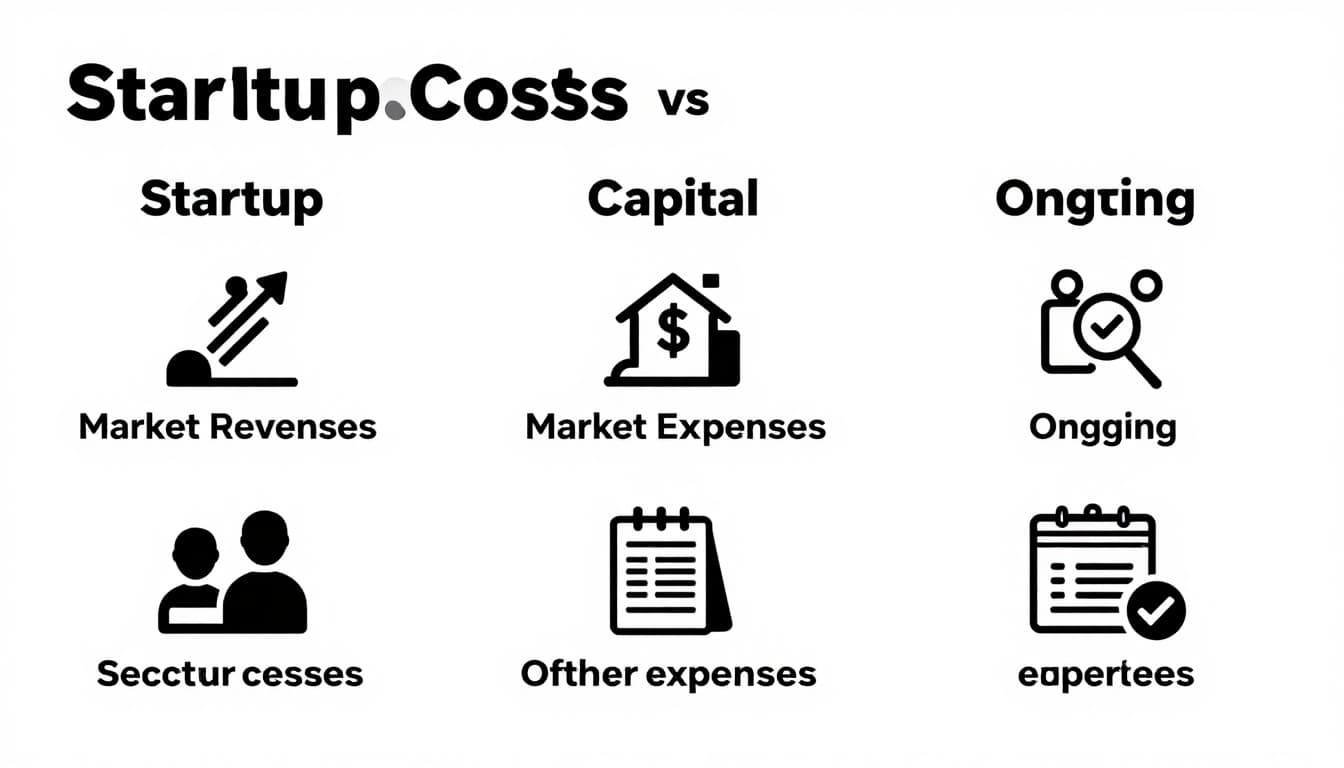
Startup Costs vs. Capital Expenses vs. Ongoing Costs
New owners mix these up often. Startup costs end when you open. Capital expenses buy long-term assets. Ongoing costs run the daily business.
Startup covers pre-launch outlays like the examples above. Capital items, such as computers or vehicles, depreciate over years. You can't deduct them fully upfront.
Ongoing expenses start after opening. Rent, utilities, and supplies fall here. They deduct fully each year.
Here's a quick comparison:
| Expense Type | Examples | Tax Treatment |
|---|---|---|
| Startup | Market research, training, travel, initial permits | Up to $5,000 deduct first year; rest amortize |
| Capital | Equipment, furniture, vehicles | Depreciate or Section 179 |
| Ongoing | Rent, supplies, advertising after open | Full deduction in year paid |
This table shows why classification matters. A $2,000 laptop bought before opening? Capitalize it. After? Deduct as supply if under safe harbor.
Get it right, and you maximize savings. Wrong bins lead to audits or lost deductions.
IRS Rules and Limits for 2026 Deductions
Federal rules haven't changed much for 2026. You deduct up to $5,000 in startup costs and another $5,000 in organizational costs. Each phases out dollar-for-dollar above $50,000. Hit $55,000 total? No immediate write-off.
Amortize the rest over 180 months, starting the month you open. For example, $7,000 in startup costs means $5,000 upfront. Spread $2,000 monthly at about $111.
Elect this on your first tax return. Attach a statement listing costs, dates, and amounts. See the IRS page on deducting startup costs for details.
Florida skips state income tax. So federal deductions flow straight to your return. No extra state forms needed.
De minimis safe harbor helps too. Expense items under $2,500 as supplies. Perfect for small office gear.
Section 179 covers bigger equipment buys post-open, up to $2.5 million limit. But startup rules stand alone.
Track your business start date closely. That's when the clock starts.
Steps to Claim Your Fort Myers Startup Costs Deduction
Claiming works simply if prepared. First, gather all receipts from pre-open spends. List them by category.
Next, decide your election. Form 4562 handles amortization. For sole props or single-member LLCs, use Schedule C. Partnerships or S corps attach to Form 1065 or 1120-S.
File in the year business begins. Say you open in June 2026. Deduct on your 2026 return, filed 2027.
Here's the flow:
- Tally costs and pick start date.
- Calculate $5,000 max per bucket.
- Amortize excess on Form 4562.
- Attach statement to return.
Software like QuickBooks tracks this. Or consult pros for entity setup, since choices affect taxes. Owners forming LLCs or S corps should review Fort Myers QBI deduction rules for LLCs and S corps too.

Miss the election? Too late for that year. Start clean records now.
Pitfalls to Avoid as a New Fort Myers Owner
Many trip on basics. Don't capitalize startup costs by mistake. Or forget the phase-out at $50,000.
Mixing personal and business hurts too. Only business portions deduct. A trip with family? Prorate it.
Ignore amortization start date, and you lose months. Open mid-year? Adjust accordingly.
Service businesses watch entity choice. An S corp election impacts related breaks. Check Florida pass-through entity tax guide for multi-state tips.
Save everything. Audits hit startups hard without proof.
Smart planning saves thousands. You built the business; claim what's yours.
Fort Myers entrepreneurs deduct startup costs to fuel growth. Nail the $5,000 limits, classify right, and elect on time. Those steps cut your first-year tax bill.
This guide offers general education. It isn't tax or legal advice. Your situation varies, so talk with a CPA before filing.