Fort Myers Form 7203 Guide for S Corp Shareholders in 2026
Own shares in a Fort Myers S corporation? You might face limits on losses or deductions. Many local owners discover this during tax season. Form 7203 helps you track stock and debt basis to stay compliant.
This form prevents claiming more than your investment allows. It attaches to your Form 1040 in specific cases. Fort Myers business owners often juggle this with payroll and K-1s from their S corp.
Read on to learn how basis works. You'll see examples and steps that fit Southwest Florida realities.
What Form 7203 Does for S Corp Shareholders
Form 7203 figures your basis in S corporation stock and debt. Basis sets the cap on losses, deductions, and credits you claim. Without it, the IRS denies excess amounts.
You must file if you claim a loss or deduction from the S corp. Attach it when distributions occur, stock sells, or the company repays your loan. Even without attachment, complete it yearly for records. This tracks carryovers and avoids audits.
S corps pass income to shareholders via Schedule K-1 (Form 1120-S). Basis adjusts with your share of income, losses, contributions, and distributions. Debt basis covers loans you make to the business.
For details, check the IRS Instructions for Form 7203. They explain limits clearly.
Fort Myers owners benefit here. Local service firms and contractors often lend to their S corps during slow seasons. Proper tracking keeps deductions valid.
The IRS updated guidance in March 2025. It covers reporting certain K-1 items on Form 7203. No big changes hit 2025 returns filed this year.

Key Differences Between Stock Basis and Debt Basis
Stock basis starts with your investment. It rises with income and contributions. Losses and distributions reduce it. Debt basis only applies to direct loans from you to the S corp.
Stock basis covers shares you own. Debt basis restores after stock hits zero. You apply losses first to stock, then debt.
Loans count if you personally lend money or property. Guarantees do not qualify. Repayments reduce debt basis before stock basis.
See more at the IRS page about Form 7203. It lists who files and recent tips.
In Fort Myers, real estate investors often loan funds for flips. Track these separately. Mixing them muddies basis.
Basis can't go below zero. Excess losses carry forward. This protects you but delays relief.
Step-by-Step Stock and Debt Basis Calculation
Start with prior-year ending basis. Add your K-1 income items first. Include tax-exempt income too. Then add contributions like cash or property.
Subtract distributions next. Cash payouts reduce basis dollar for dollar. Property uses fair market value.
Apply losses and deductions last. Nondeductible expenses also reduce basis.
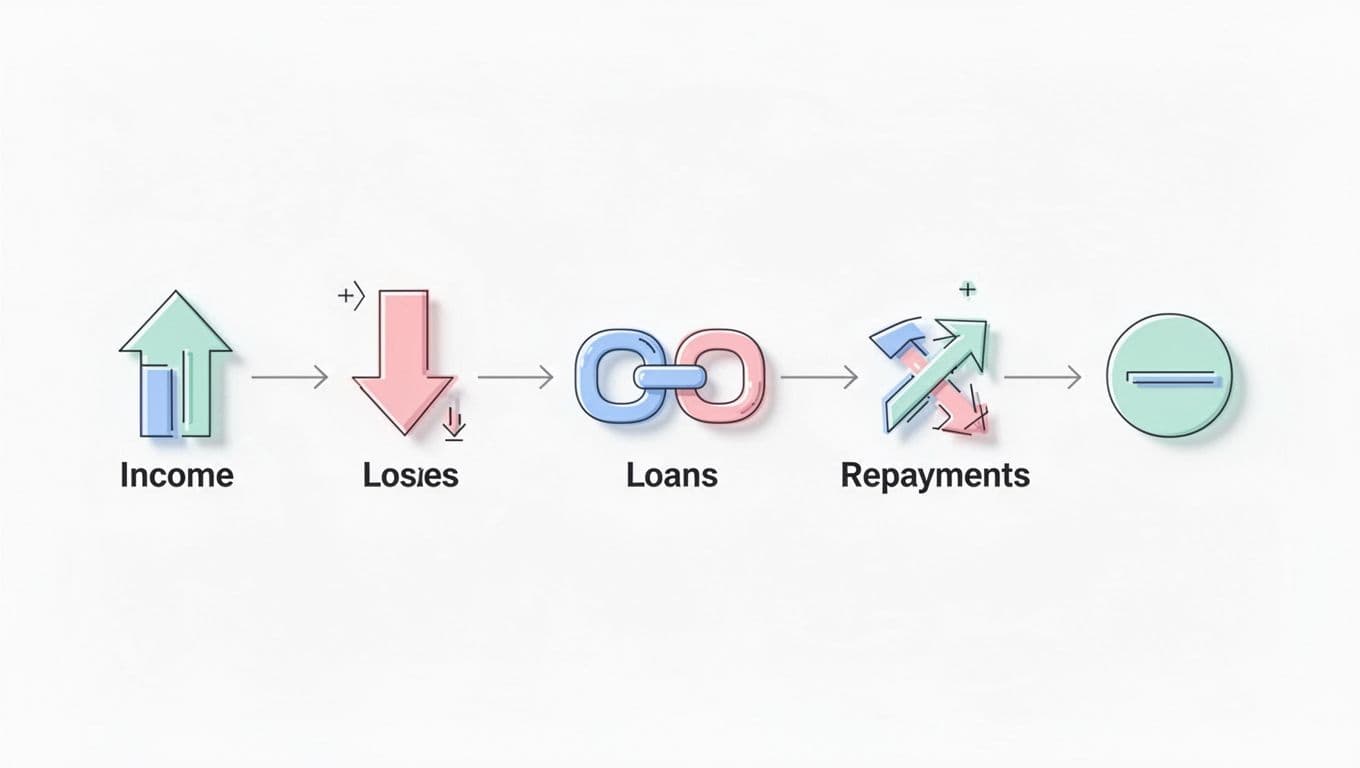
For debt, begin with prior debt basis. Add new loans and allocated income. Subtract repayments and losses after stock basis zeros out.
Here's a simple table of adjustment order:
| Step | Adjustment Type | Example Impact |
|---|---|---|
| 1 | Initial basis | $50,000 stock |
| 2 | + Income | +$30,000 K-1 |
| 3 | + Contributions | +$10,000 cash |
| 4 | - Distributions | -$20,000 cash |
| 5 | - Losses | -$40,000 net |
Order matters because income boosts basis before subtractions. Always follow this sequence.
If you elected S status recently, review our Florida S corporation election guide for Fort Myers LLC owners. It ties into basis tracking.
Practical Examples for Common Fort Myers Scenarios
Take losses exceeding basis. A Cape Coral contractor's S corp shows $80,000 loss on K-1. Your stock basis sits at $50,000, debt at $20,000. Deduct $70,000 total. Carry forward $10,000.
Distributions work similarly. You take $15,000 cash after $10,000 income raises basis. No tax if within basis. Excess triggers gain.
Loans help extend limits. You lend $30,000 mid-year. After stock zeros, shift losses to debt basis. Repayment later reduces it first.
For reasonable pay in these setups, see our Fort Myers reasonable compensation guide for S corporation owners. Wages affect pass-through income.
A Fort Myers rental owner sells shares. Compute basis to report gain. Low basis means more taxable gain.
Track multiple stock lots separately if acquired differently. This avoids errors.
2026 Filing Deadlines and Tips
File Form 7203 with your 2025 Form 1040. Due April 15, 2026. Extend to October 15 with Form 4868, but pay taxes by April.
E-file speeds processing. Paper works but delays refunds.
Fort Myers owners, pair this with payroll reviews. Clean books make basis easy. Use QuickBooks for K-1 tracking.
If reimbursing expenses, set an accountable plan for S corps. It keeps basis accurate.
Keep all K-1s and records seven years. IRS audits focus here.
Basis rules protect the system. They ensure losses match real investment.
Form 7203 keeps your Fort Myers S corp deductions solid. Track basis yearly to claim full benefits. Examples show losses, distributions, and loans fit daily operations.
This guide offers general info as of April 2026. It is not tax or legal advice. Rules change, and your situation varies. Consult a professional for personalized help.
(Word count: 982)