Small Business Tax Records: What to Keep and How Long
A tax return is easier to prepare when every number has a clear paper trail. Your small business tax records should explain what you earned, what you spent, and how you calculated payroll and taxes.
Keeping receipts is only part of the job, because retention periods vary by document and circumstance. Federal tax rules also don't replace state, local, or employment-law requirements.
Start by separating the records that support daily transactions from those you need for payroll, tax filings, and long-term ownership.
What belongs in your small business tax records
Your books summarize business activity, while supporting documents explain each entry. Keep both so your preparer can trace return totals back to individual transactions.

Income and customer payments
Save customer invoices, sales reports, deposit slips, payment-processor statements, and records of cash receipts. Keep information returns received from customers or payment platforms, along with explanations of discrepancies.
Also preserve refund, chargeback, and customer-deposit records. These help explain why gross sales don't always equal bank deposits.
For example, a processor may deduct fees before sending a settlement to your bank. Retaining the sales report and settlement breakdown helps your accountant record revenue and fees separately.
Identify owner contributions and loan proceeds, too, so someone reviewing deposits doesn't mistake them for sales.
Expenses and business purpose
Keep vendor invoices, receipts, paid bills, canceled checks, and bank and credit card statements. Save contracts or approval records when they explain a payment.
IRS Publication 583 describes supporting documents and the records needed to establish income, expenses, and property basis.
A bank statement may prove that you paid a vendor without showing what you purchased or why it was a business expense.
Record the business purpose promptly, especially for travel, meals, and mixed-use purchases. Also retain reimbursement approvals and documentation of advances that employees return.
Keep filed returns and financial reports together
Save complete copies of filed tax returns, supporting schedules, amended returns, filing confirmations, and tax-payment confirmations. Keep IRS notices and your responses with the affected year.
These documents help establish what you reported and whether a payment or correction resolved an issue. However, a filed return doesn't replace its underlying receipts and calculations.
Your year-end file should also include the profit and loss statement, balance sheet, general ledger, and completed bank and credit card reconciliations. Preserve notes supporting adjusting entries rather than relying on the final totals alone.
Keep loan agreements and statements that distinguish principal payments from interest. Similarly, retain documentation for owner contributions, distributions, and transfers between accounts.
If the books don't match the statements, resolve differences before tax preparation. Meghan Sophia Tax & Accounting's small business bookkeeping support can help maintain the reconciliations and reports behind your return.
Payroll records need a separate supporting file
Payroll documentation must explain employee compensation, withholding, employer taxes, and payments. A bank withdrawal alone won't provide that detail.
Employee and pay records
Keep employee identification information, employment dates, wage amounts, pay dates, and withholding records. Also retain approved time records, pay-rate authorizations, and documentation supporting bonuses or other adjustments.
The IRS employment-tax recordkeeping guidance identifies records employers should maintain, including employee information, wage payments, tax deposits, and filed returns.
Before approving payroll, compare the register with your current employee list. Review new hires, departures, pay changes, and reimbursements so outdated information doesn't carry into another run.
Because these files contain sensitive personal information, limit access to people who need it for their work.
Payroll filings and payment evidence
Save payroll registers, payroll summaries, employment-tax returns, wage-reporting documents, and filing confirmations. Keep tax-deposit records and bank confirmations beside the related reports.
After each payroll, compare actual withdrawals with the approved amounts. Then reconcile payroll liabilities at least monthly to identify unpaid taxes, duplicate entries, or timing differences.
When you correct payroll, preserve the original report and an explanation of the adjustment. Record who approved it and whether it changed a previously filed return.
Professional business payroll and tax services can help coordinate processing and filing. However, your business should retain accessible copies of the records.
How long should you keep tax and payroll records?
There isn't one retention period for every document. The IRS record-retention periods depend on the action, expense, or event involved.
These federal guidelines cover common situations.
| Record or circumstance | Federal retention guidance |
|---|---|
| Ordinary income-tax support | Generally three years, subject to exceptions |
| Refund or credit claim after filing | Three years after filing the original return or two years after paying the tax, whichever is later |
| Unreported income exceeding 25% of gross income shown on the return | Six years |
| Bad-debt deduction or worthless-securities loss | Seven years |
| No return filed or a fraudulent return | Indefinitely |
| Employment-tax records | At least four years, with timing addressed below |
| Property records | Through the limitations period for the year of taxable disposition |
Three years is a baseline , not permission to destroy everything from an older year. For returns filed before their due date, the IRS generally treats the due date as the filing date.
Payroll requires particular care. Publication 583 says to retain employment-tax records for at least four years after the tax becomes due or is paid, whichever is later. The IRS employment-tax recordkeeping page instead describes four years after filing the fourth-quarter return for the year.
Because those starting points differ, use a policy that satisfies both and ask your tax professional to confirm the disposal date.
Also suspend routine destruction when records relate to an unresolved examination, claim, or dispute. Other laws, insurers, and lenders may require longer retention.
Preserve asset records beyond the purchase year
Equipment, vehicles, buildings, and improvements can affect tax returns long after you buy them. Keep purchase invoices, financing documents, installation costs, and records showing when an asset entered business use.
Also save depreciation schedules and documentation of improvements, sales, or other dispositions. These establish adjusted basis and help calculate gain or loss.
The IRS generally directs businesses to retain property records until the limitations period expires for the year of taxable disposition. Therefore, an older purchase invoice may still be needed even after its original year's ordinary retention period ends.
For business driving, keep a timely mileage log showing dates, destinations, mileage, and business purpose. Preserve reimbursement records when the company pays employees for eligible business travel.
Separately, maintain a long-term company file for formation documents, ownership agreements, and tax-identification records. Their ongoing business value may justify keeping them well beyond routine transaction documents.
Federal guidance doesn't replace Florida requirements
The IRS rules above concern federal taxes. Florida and local authorities have separate requirements, and employment laws may cover records beyond employment-tax filings.
For a Southwest Florida business, additional files may include sales and use tax returns, exemption documentation, reemployment-tax reports, annual reports, and local business tax receipts. Keep payment confirmations and agency correspondence with those documents.
Don't assume a federal three-year or four-year period satisfies every obligation. Instead, identify the agencies and rules that apply to your business, then confirm retention requirements for each category.
Businesses with employees or sales outside Florida should also review the requirements of those jurisdictions. Your business address alone doesn't determine every filing obligation.
A written retention schedule should distinguish federal tax records from state tax, local licensing, and employment records. When a document serves several purposes, keep it for the longest applicable period.
Organize records so another person can follow them
Your filing system should connect each transaction to its source document without requiring someone to reconstruct events from memory.
Use consistent folders and names
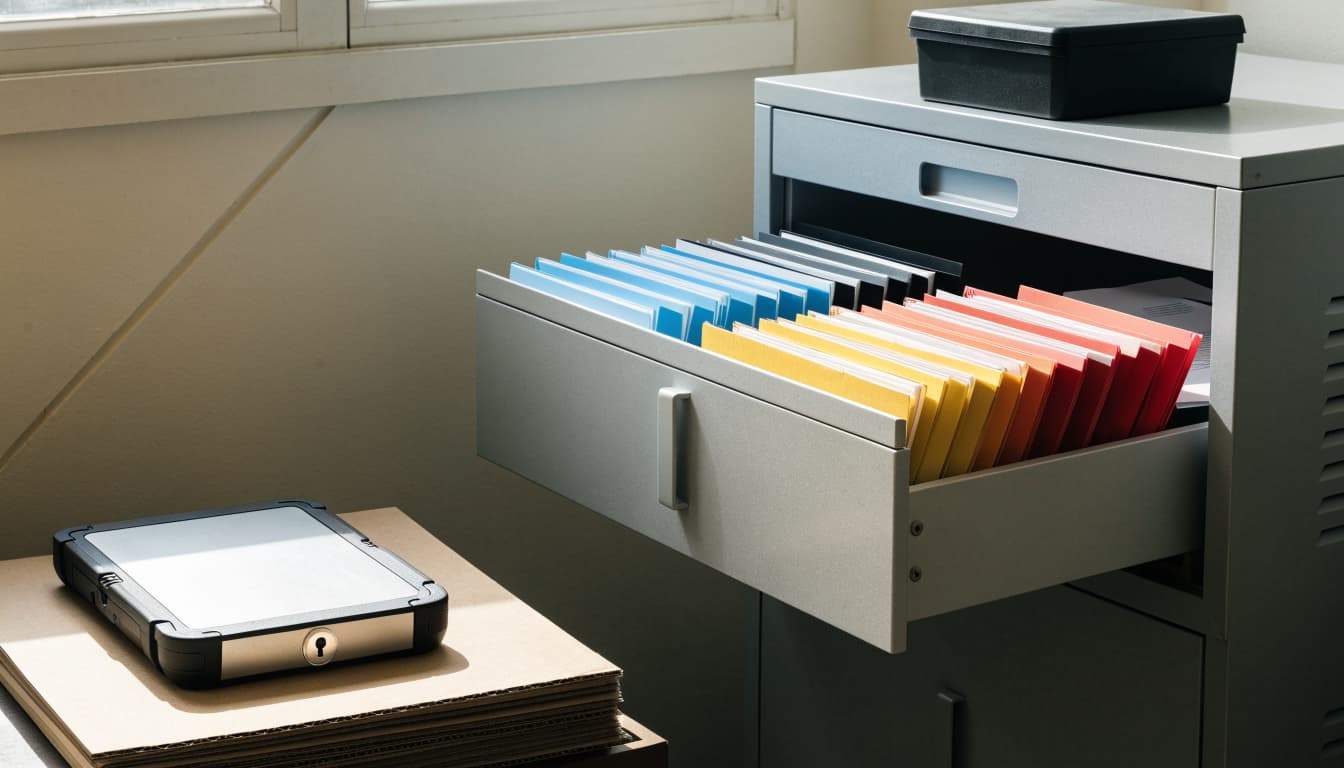
Create folders by year, then separate income, expenses, banking, payroll, tax filings, and assets. Within high-volume categories, organize documents by month.
Use a consistent filename containing the date, vendor or employee reference, and document type. Avoid putting full Social Security numbers in filenames.
Keep reconciliation notes with the statements they explain. Also record the reason for adjustments, the supporting evidence, and who approved them.
A shared filing standard helps when you change bookkeepers or tax preparers. If you're starting fresh, accounting system setup assistance can help establish a workable structure.
Protect files and test retrieval
The IRS permits systems that clearly show income and expenses, as its business recordkeeping guidance explains. Electronic storage still needs complete, accurate, legible, and retrievable records.
Scan paper documents clearly and check that every page saved. Back up files regularly, then test whether you can restore them.
Restrict payroll access and use individual professional-user permissions rather than sharing your password. Before changing providers or closing software accounts, download retained reports and supporting files.
For Southwest Florida businesses, a secure backup away from the office also helps protect records against storm damage.
Review records monthly, not only at tax time
A regular review catches missing documents while transactions are still familiar. It also reduces the amount of rebuilding your preparer must do.
Use this sequence when closing each month:
- Collect missing receipts, invoices, statements, and payroll reports.
- Reconcile bank, credit card, payment-processor, and payroll liability accounts.
- Investigate differences and save notes explaining corrections.
- Review financial reports and document unresolved questions.
Assign responsibility for collecting documents, approving payments, and communicating with the tax preparer. Set a monthly handoff date so incomplete files don't accumulate.
Before year-end filing, compare payroll totals, information returns, and reported income with the books. Explain differences rather than changing entries simply to force a match.
Finally, review your retention schedule before deleting anything. Confirm that asset records, unresolved issues, and documents governed by longer requirements remain protected.
Keep a record you can explain
Useful small business tax records connect reported totals to transactions you can verify. Complete support matters more than a folder full of unexplained statements.
Keep payroll documentation separate and accessible, then apply retention periods by record type and circumstance. Before discarding older files, confirm that federal, state, and other applicable requirements have all been satisfied.
A consistent monthly routine makes that paper trail easier to maintain and easier to use when tax preparation begins.