Landed Cost Accounting for Small Retailers
A product's supplier price rarely shows what it truly costs your business. Freight, import duties, insurance, and receiving charges can turn a $10 item into a $12 item before it reaches your shelf.
Landed cost accounting gives you a more accurate view of inventory value, gross profit, and pricing. It also helps you separate costs that belong in inventory from expenses that should stay on the income statement. For small retailers and e-commerce operators, that distinction can affect both daily decisions and tax reporting.
What Landed Cost Includes
Landed cost is the total cost required to acquire products and get them ready for sale. The starting point is the vendor's invoice, but the final inventory cost may include several other charges.
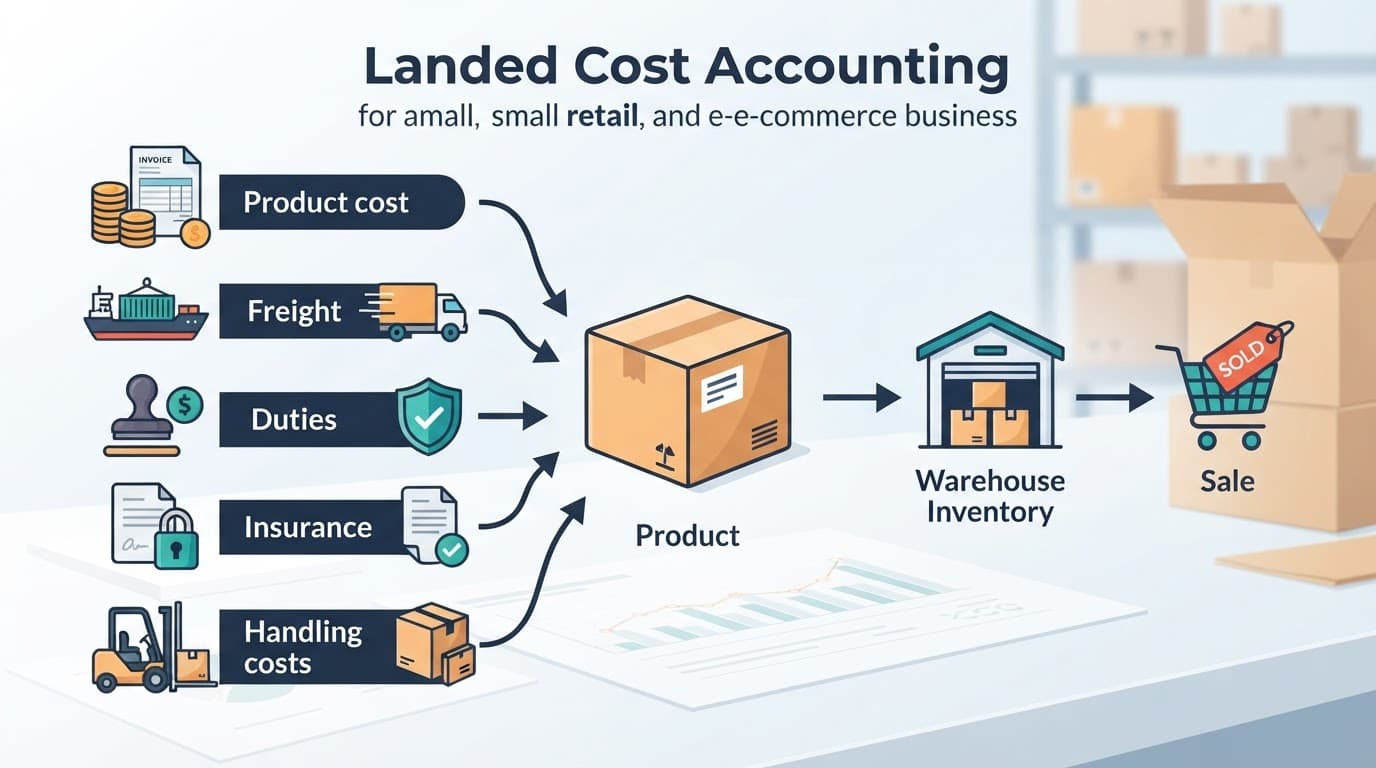
Costs that usually belong in inventory
For purchased merchandise, the IRS generally starts with the invoice price, subtracts discounts, and adds transportation or other charges connected with acquiring the goods.
| Cost | Typical treatment |
|---|---|
| Supplier invoice | Included in product cost |
| Inbound freight | Added to inventory cost |
| Import duties | Usually part of acquisition cost |
| Customs broker charges | Include when tied to importing the goods |
| Cargo insurance | Include when it covers delivery to your business |
| Port, terminal, or receiving charges | Include when directly related to acquiring inventory |
The exact treatment depends on the facts, your accounting method, and the type of charge. A customs fee connected to bringing products into the country is different from a monthly warehouse rent bill.
Costs that usually stay outside landed cost
Shipping an order to a customer is generally freight-out, not freight-in. It is usually a selling or fulfillment expense rather than part of the inventory's acquisition cost.
Marketplace commissions, payment processing fees, advertising, storage rent, office supplies, and customer service payroll also typically remain operating expenses. You may track them for internal product profitability, but don't automatically add them to tax inventory.
Why Accurate Landed Cost Matters
Supplier pricing can make one product appear more profitable than it is. If you ignore inbound charges, your reports may show strong margins while your bank account tells a different story.
Better pricing and purchasing decisions
Suppose you buy two similar products. One has a lower supplier price, but it comes by air freight and carries higher customs charges. The second costs more on the invoice but arrives by sea with lower delivery costs.
Comparing invoice prices alone could lead you to choose the less profitable item. Landed cost accounting puts both products on the same basis. You can then set prices, compare suppliers, and decide whether a bulk order makes financial sense.
It also improves reorder decisions. A product with a high retail price may tie up cash and produce little profit after inbound costs. A lower-priced item may generate better margin and sell faster.
Cleaner profit and tax records
Inventory is an asset until you sell it. Once the product sells, its assigned cost moves to cost of goods sold, or COGS. COGS reduces gross profit on your income statement.
When inventory values are wrong, several reports can be wrong at once. Gross profit, taxable income, balance sheet assets, and cash planning may all suffer.
Owners who want a clearer explanation of the accounting connection can review this Fort Myers cost of goods sold guide. The same records support monthly bookkeeping and year-end tax preparation.
How to Calculate Landed Cost Per Unit
A basic per-unit calculation is simple:
Landed cost per unit = total product and acquisition costs divided by sellable units
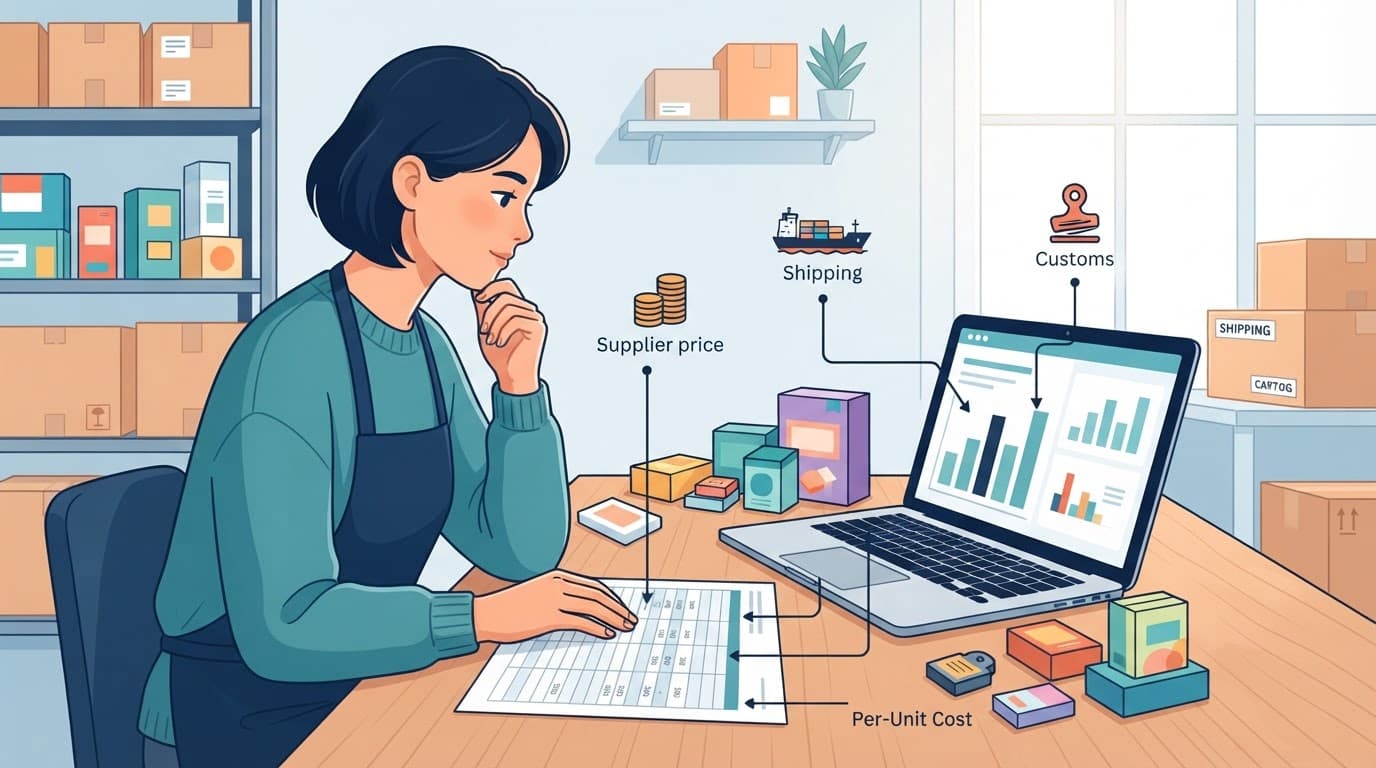
Use every relevant inbound charge
Assume a retailer imports 100 mugs with these costs:
- Supplier invoice: $1,000
- Inbound freight: $80
- Customs-related charges: $60
- Customer order shipping after sale: $45
The landed inventory cost is $1,140. Divide that amount by 100 sellable mugs, and the landed cost is $11.40 per mug .
The $45 customer shipping charge doesn't belong in that calculation. Track it separately as fulfillment or shipping expense.
If a shipment contains several SKUs, allocate shared charges with a consistent method. Common methods include allocating by units, weight, product value, or cubic space. Weight often makes sense for freight. Product value may work better for customs or insurance.
Adjust for damaged or unsellable goods
Use sellable units when calculating a unit cost. If five products arrive damaged and cannot be sold, dividing the shipment cost across all 100 units understates the cost of the 95 units available for sale.
Document the damage, vendor credit, disposal, or insurance recovery. Don't change inventory quantities without recording why. A clear paper trail helps you explain differences during a tax review or financial statement review.
Landed Cost Accounting and U.S. Tax Rules
Tax reporting and internal management accounting overlap, but they aren't identical. Your internal reports may track every cost connected with a product's profitability. Tax inventory follows the rules for your accounting method and business situation.
What the IRS generally requires
The IRS Publication 334, Tax Guide for Small Business explains inventory and COGS rules for small businesses. For purchased merchandise, acquisition cost generally includes the purchase price plus transportation and other charges required to obtain the goods.
The COGS calculation commonly uses this structure:
Beginning inventory + purchases + direct costs - ending inventory = COGS
Schedule C adds lines for labor, materials and supplies, and other costs when those items apply. Corporations generally use Form 1125-A.
Inventory methods must consistently reflect income. Depending on the taxpayer and circumstances, possible valuation methods include cost, lower of cost or market, and other methods allowed by the IRS. The IRS Form 1125-A instructions describe the inventory valuation choices reported by corporations.
Section 263A, also called the uniform capitalization rule, can require certain businesses to capitalize additional direct and indirect costs. The current IRS Publication 538 guidance provides more information about accounting periods, inventory, and capitalization.
Keep tax treatment separate from pricing analysis
Your management report might calculate a broader product margin:
Sales price - landed product cost - selling and fulfillment costs = contribution margin
That view can include marketplace fees, payment fees, pick-and-pack labor, returns, and customer shipping. It helps you decide whether a product deserves shelf space.
However, those costs don't automatically belong in tax inventory. A business may track them in separate accounts while using a narrower inventory calculation for tax purposes.
Tax treatment can vary by business structure, inventory size, accounting method, and jurisdiction. Florida sales tax rules also differ from federal income tax rules. Confirm your approach with a qualified CPA before changing an inventory method or filing a return.
A Practical Setup for a Small Retail Business
You don't need a large accounting department to build a workable landed cost process. You do need consistent records and a rule that your team follows every time.
Set up useful accounts and product records
Create separate accounts for inventory, COGS, inbound freight, duties, customer shipping, inventory adjustments, and purchase returns. Your chart of accounts should make it clear which costs increase inventory and which costs reduce current-period profit.
For product records, assign each SKU a clear name, unit of measure, supplier, purchase price, and standard cost. If your costs change often, review standard costs regularly rather than allowing old figures to remain in your system.
A good QuickBooks setup checklist for new small businesses can help you review inventory, sales tax, and account settings before transactions accumulate.
Record the shipment as one complete cost
Save the supplier invoice, freight bill, customs entry, broker invoice, and insurance charge together. Record the product invoice when purchased, then assign related inbound charges to the shipment or SKU once the final bills arrive.
If your accounting software can't allocate landed costs automatically, use a spreadsheet that lists:
- Shipment date and supplier
- Purchase order or invoice number
- SKUs and quantities
- Freight, duty, insurance, and broker charges
- Allocation method
- Final cost per unit
- Date posted to the accounting system
The spreadsheet should support the books, not replace regular reconciliation. Match the shipment total to vendor and carrier documents before closing the month.
Common Errors That Distort Inventory Profit
Small businesses often make landed cost mistakes because purchases, freight bills, and sales data arrive at different times.
Mixing inbound and outbound shipping
Inbound freight increases the cost of acquiring products. Outbound shipping relates to fulfilling a customer order. Combining both expenses in one account makes product margins harder to read and can produce inconsistent tax treatment.
Use separate accounts and require a short description on every shipping transaction. "Freight-in, shipment 1842" is more useful than "shipping expense."
Allowing negative inventory to continue
Negative inventory means your system recorded a sale before it recorded enough purchases. The software may assign an incorrect cost to the sale, causing one month to look too profitable and another to look too weak.
Review negative quantities at least monthly. Correct the original purchase or sales entry when possible, then record documented adjustments for shrinkage, damage, or counting errors. This QuickBooks inventory adjustment guide covers the effect of quantity corrections on COGS and inventory balances.
Changing methods without documentation
Switching between FIFO, average cost, and specific identification can change reported profit. Don't change methods because one month produces a more attractive result.
Write down the method, allocation rule, approval date, and reason for any change. Ask your CPA whether the change requires IRS approval or a formal accounting-method adjustment.
Landed Cost Implementation Checklist
Use this checklist when you build or repair your process:
- List every inbound cost that can affect the cost of acquiring products.
- Separate freight-in from customer shipping and fulfillment expenses.
- Choose one allocation method for shared shipment charges.
- Create inventory, COGS, freight, duty, and adjustment accounts.
- Match invoices, freight bills, customs documents, and insurance records.
- Calculate cost per SKU using sellable units.
- Reconcile inventory quantities and values each month.
- Review slow-moving, damaged, returned, and obsolete products.
- Compare landed cost with selling price and total fulfillment cost.
- Have a qualified CPA review the tax method before year-end filing.
The best process is one your business can follow during a busy receiving week. A simple, consistent worksheet is better than a complex system that nobody updates.
Conclusion
Landed cost accounting shows what inventory costs before it reaches the customer. By adding appropriate inbound charges, separating outbound expenses, and assigning costs consistently, you get better pricing information and more reliable COGS.
Keep management reporting broad enough to measure real product profitability, but follow tax inventory rules when preparing returns. Accurate records turn every shipment into useful financial information, not a year-end guessing exercise.