Fort Myers Cash vs Accrual Accounting for Small Businesses
Pick the wrong accounting method, and your numbers can tell the wrong story. For Fort Myers owners, that can mean shaky cash planning in the slow season, surprise tax timing, or reports that look better, or worse, than reality.
The good news is that cash vs accrual accounting is easier to understand than it sounds. Once you see how each method treats money, invoices, and bills, the right fit becomes much clearer.
What cash and accrual accounting really mean
Think of cash accounting like checking your wallet. You count income when money comes in, and you count expenses when money goes out.
Accrual accounting works more like a scoreboard. You record income when you earn it and expenses when you owe them, even if cash moves later.
As of March 2026, many small businesses can still use the cash method if their average annual gross receipts for the prior three tax years are about $32 million or less, subject to other IRS rules. The IRS explains the broader rules in Publication 538 on accounting methods.
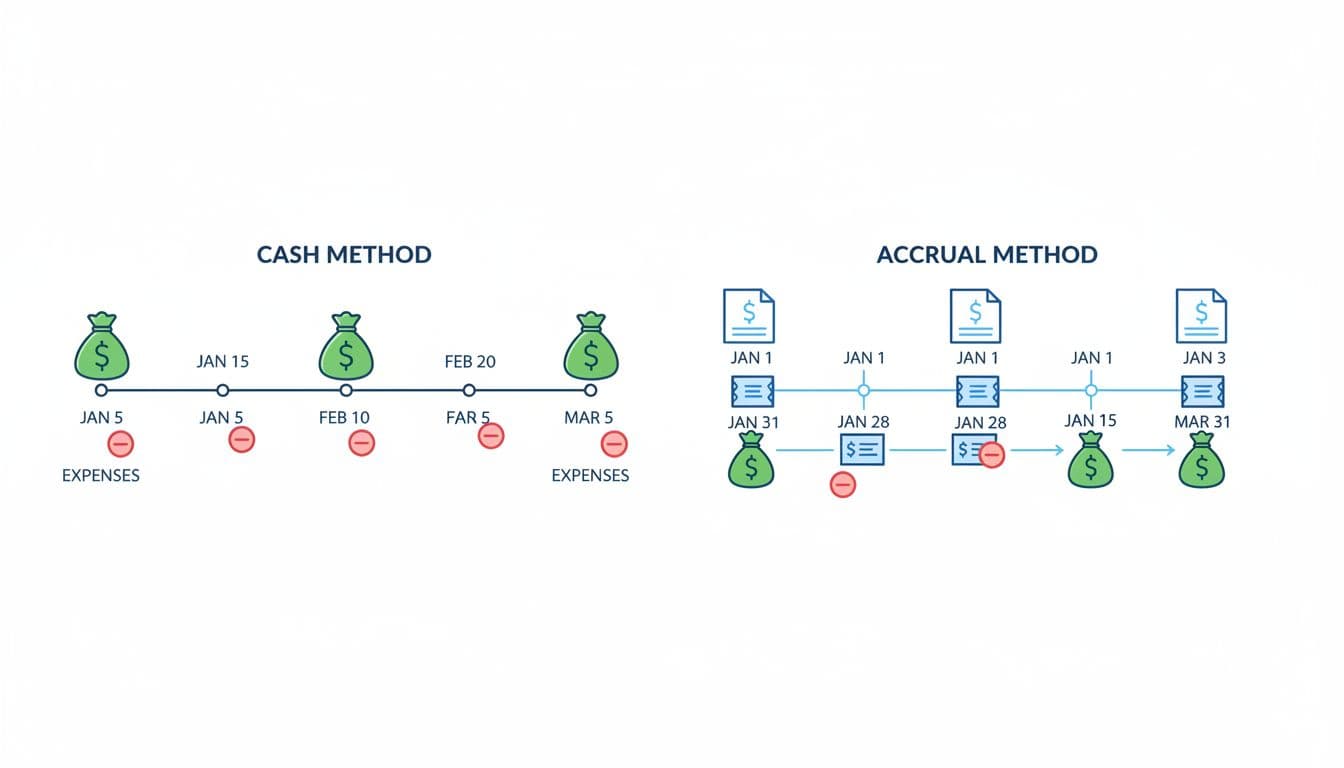
Here's the simplest side-by-side view:
| Topic | Cash method | Accrual method |
|---|---|---|
| Income recorded | When payment is received | When work is done or sale is made |
| Expense recorded | When paid | When bill is incurred |
| Best fit | Simpler service businesses, tighter cash tracking | Businesses with inventory, financing needs, or heavier invoicing |
| Strongest benefit | Clear view of bank cash | Clear view of true profit |
| Main drawback | Can hide unpaid bills and receivables | Can look profitable before cash arrives |
The main takeaway is simple: cash shows cash reality , while accrual shows business performance more fully.
If your books feel messy before you even pick a method, a clean account structure matters first. This guide on Fort Myers chart of accounts setup for clean books can help you build reports you can trust.
How each method affects cash flow, profit, taxes, and financing
Cash flow is where many owners start, and for good reason. If you're a Fort Myers contractor, restaurant owner, or solo consultant, cash accounting often feels natural because it matches the bank account. You know what you can spend today.
However, cash can blur the bigger picture. A contractor might finish a job in December, send a $20,000 invoice, and get paid in January. Under cash accounting, December looks weak. Under accrual, December shows the revenue when the work was completed.
That same timing issue affects expenses. A restaurant may receive food and supplies this month but pay the vendor next month. Cash accounting delays the expense. Accrual records it when the obligation starts. As a result, profit reports often look smoother and more accurate under accrual.
A business can be short on cash and still profitable on paper, or flush with cash and still carry weak margins.
Taxes can also shift based on timing. Cash accounting may delay income into the next tax year if payment comes later. Accrual may pull income forward because the work was already earned. Neither method is automatically better for taxes. It depends on your revenue cycle, expenses, inventory, and entity type. The IRS also covers small business recordkeeping and reporting in Publication 334 for small businesses.
Lenders often prefer accrual-based statements because they show receivables, payables, and trend lines more clearly. If you plan to apply for a loan or line of credit, accrual reporting can make your numbers easier to defend. Even so, some businesses keep tax books on cash and use accrual-style reports for management.
If you use QuickBooks, setting the method early helps avoid cleanup later. This Fort Myers QuickBooks setup checklist for new businesses is a good next step if your file is still new.
Real-world Fort Myers examples by business type
A local service business with low overhead often does well on cash. Think of a one-owner marketing firm, therapist, or consultant. These businesses usually want a clean view of collections, owner draws, and taxes, not layers of unpaid inventory or vendor accruals.
 Photo by Leeloo The First
Contractors are more mixed. If you invoice after milestones, track retainage, or carry large unpaid material bills, accrual often gives a truer picture of job profit. Cash can still work for some smaller trades, but it may hide what each project is really earning.
Restaurants and retailers usually need closer attention. Inventory, gift cards, vendor payables, and card-processing delays can make cash reports look choppy. Accrual often helps these businesses see gross profit and cost patterns faster.
Seasonal tourism businesses in Fort Myers also need to think past the bank balance. A kayak rental company, boutique hotel service vendor, or beach-area retailer may look great during peak months and flat in summer. Accrual can help show whether the slow season is a timing issue or a pricing problem.
That said, simple doesn't mean wrong. Cash is often the right fit when the business is small, collections are fast, and the owner mainly needs clear tax and cash visibility. The smarter choice is the one that matches how your business runs, not the one that sounds more advanced.
Once you choose a method, stick with a strong monthly process. A practical Fort Myers bookkeeping monthly close checklist can help you catch timing issues before they snowball.
Changing methods later is possible, but it isn't a casual switch. Some changes require IRS approval procedures, often through Form 3115. Because of that, confirm your eligibility, inventory treatment, and any accounting method change with a qualified CPA or tax professional before making the move.
Choose the method that tells the truth about your business
The best accounting method is the one that helps you make better decisions, not the one with the fanciest name. For many Fort Myers small businesses, cash works well when simplicity and daily cash control matter most. Accrual often wins when invoicing, inventory, financing, or seasonality make timing more complex.
If your reports don't match what you're seeing in real life, that's a sign to review the method, not ignore the numbers.
A short talk with a CPA can save a long cleanup later. Choose the method that tells the truest story about your business, then build your bookkeeping around it.