
Florida Sales Tax on Deposits and Prepayments: A 2026 Guide for Businesses
A customer gives you money before the job is done, and the tax question lands on your desk right away. If you're sorting out florida sales tax deposits , the hard part isn't the label on the payment.
What matters is the underlying sale. A refundable security deposit is not the same as an advance payment for taxable goods, and a contractor draw is not the same as a retail down payment.
That single rule clears up most of the confusion.
How Florida sales tax deposits are really taxed
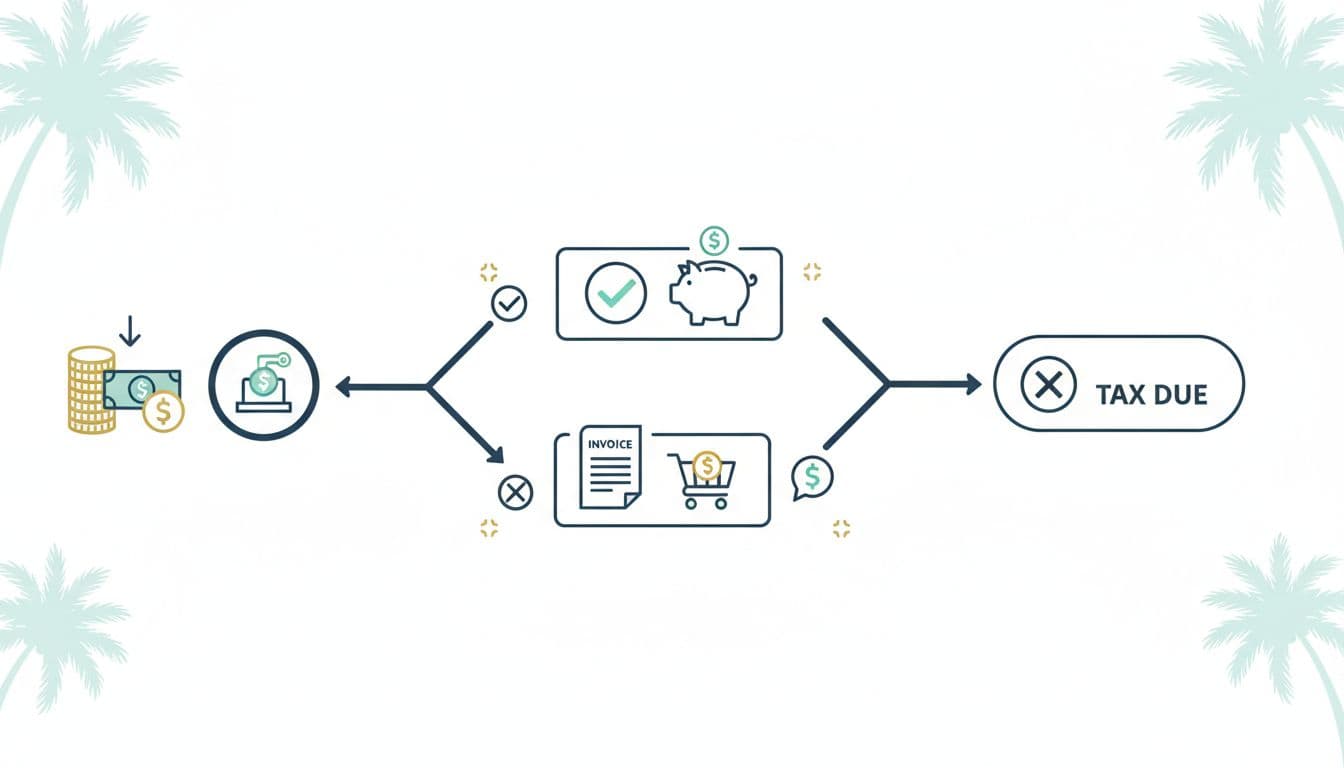
As of March 2026, published Florida Department of Revenue material does not appear to create a stand-alone rule for deposits or prepayments. In plain English, Florida does not seem to say, "all deposits are taxable" or "all deposits are exempt." You still have to ask what the payment is for.
If the money is true security , and you return it to the customer, it generally is not part of a taxable sale. If the money is really an advance payment for taxable goods or taxable charges, it usually takes on the same tax treatment as that sale once it becomes part of the sale price.
That means the word "deposit" can mislead you. Two invoices can use the same word and reach different tax results.
The safest test is simple: ask whether the money is being held, or whether it is paying for a taxable sale.
This matters because Florida sales tax is still based on the normal rules, 6% state tax plus any county surtax that applies to the transaction. Florida returns are generally filed on Form DR-15, and they are usually due by the 20th of the next month. For a current state overview, see the Florida Business Owner's Guide for the Major Florida Taxes.
Common deposit and prepayment scenarios that trip people up
Some situations are easier to judge when you line them up side by side.
| Scenario | Likely treatment | Why it matters |
|---|---|---|
| Refundable security deposit, later returned | Usually not taxable | It was held, not earned as sales price |
| Prepayment for taxable goods | Usually taxable as part of the sale | It is paying for taxable property |
| Deposit applied to final invoice | Follows the final taxable charges | The label does not control the result |
| Order canceled, full refund issued | Usually no tax remains due | The sale was unwound |
| Order canceled, seller keeps a fee | Depends on what the fee pays for | Facts and paperwork matter |
| Deposit on repair work | Depends on the final invoice | Mixed charges often create errors |
| Deposit on a real property contract | Often not taxed like a retail sale to the customer | Many contractors pay tax on materials instead |
Repairs are a common trouble spot. A shop may take $300 up front for an equipment repair, then finish the job with parts, labor, pickup, and a disposal fee on one invoice. That deposit is not taxable because of its name. It follows the final charges it pays for. If the deposit reduces taxable parts or other taxable amounts, then tax follows those charges.
Canceled orders also deserve care. If you refund the whole prepayment, there usually is no taxable sale left. If you keep a cancellation fee, the answer gets more fact-based. Your contract, invoice wording, and what the fee covers all matter.
Construction and contractor jobs are different from straight retail sales. In many real property improvement contracts, the contractor is the consumer of materials and pays tax when buying them, rather than charging retail sales tax to the customer on the full contract price. So a customer deposit on a remodeling job often should not be treated like a retail down payment at a store counter. Still, if you separately sell tangible items or perform work that stays a taxable retail transaction, the result can change.
Practical ways to book and report deposits correctly
Good bookkeeping keeps this from turning into a guessing game. First, don't post every customer deposit straight to income. If the payment is still refundable or tied to unfinished work, many businesses track it in a customer deposits or deferred revenue account until the invoice is final.

A few habits help a lot:
- Match each payment to a source document : estimate, contract, work order, or sales invoice.
- Separate refundable deposits from advance sales : they should not live in the same bucket.
- Show the deposit application on the final invoice : this gives you a clean tax trail.
- Keep refund and cancellation proof : bank records alone rarely tell the full story.
Also, don't use bank deposits as your sales tax report. Bank activity includes loans, transfers, owner funds, tips, and old receivables. That shortcut causes messy DR-15 filings. If you need a cleaner filing process, this Florida DR-15 sales tax return filing guide explains how to avoid deposit-based reporting mistakes.
Month-end cleanup matters too. Your books should show which payments stayed as liabilities, which turned into taxable sales, and which were refunded. This Fort Myers monthly bookkeeping close checklist is a practical way to tie invoices, deposits, and sales tax payable together.
When it's time to file or pay, the state posts current options through the Florida eFile and Pay Information Center. If a transaction still feels gray, get facts together before filing and ask for Florida-specific guidance. That's better than fixing it after a notice arrives.
Deposits are a lot like labels on storage boxes. The label gives you a hint, but the contents tell you how to handle it.
For Florida sales tax deposits , the strongest rule is still the simplest: taxability follows the real transaction, not the word on the receipt. If your deposits, repair tickets, or contractor billings don't tie to your books, clean that up before the next return is due.