Florida Homestead Exemption: Eligibility and Filing
The Florida homestead exemption reduces the taxable value of your permanent home if you meet ownership and residency requirements on January 1. You generally must apply by March 1 of the tax year you want the benefit.
Buying a home doesn't automatically enroll you, and a vacation property doesn't qualify simply because you spend winters here. The first step is separating the residency requirements from the application process.
Key Takeaways
- You generally must own the property and make it your permanent residence on January 1.
- The first $25,000 exemption applies to school and non-school property taxes; an additional inflation-adjusted exemption applies only to non-school taxes.
- Apply through your county property appraiser, retain your confirmation, and request portability separately when moving between qualifying Florida homes.
Who qualifies for the Florida homestead exemption?
Eligibility depends on your ownership rights and how you use the property. A Florida mailing address alone doesn't establish your permanent residence.

Meet the January 1 ownership requirement
You generally must hold legal or equitable title on January 1 of the year claimed. The property must be your permanent residence, or the permanent residence of your legal or natural dependent.
Eligible properties can include houses and condominiums. Certain trust arrangements can qualify when the beneficiary holds the required ownership interest.
For the 2027 exemption, the relevant eligibility date is January 1, 2027 . Purchasing and moving into a home after that date generally means waiting until the following tax year.
Establish Florida as your permanent home
A seasonal home, investment property, or short-term rental generally doesn't meet the permanent-residence requirement. Your intent to remain in Florida must agree with your actual living arrangements.
Driver's license records, vehicle registration, voter registration when applicable, and occupancy dates help document that decision. Our guide to establishing Florida domicile after moving explains how those records work together.
Also disclose any residency-based property-tax benefit claimed elsewhere. Keeping an incompatible exemption on a former residence can jeopardize your Florida application.
How much does the exemption reduce taxable value?
The exemption reduces assessed value , rather than subtracting the same dollar amount from your tax bill. Your savings depend on the applicable tax rates.
School and non-school taxes receive different treatment
The first $25,000 exemption applies to school district taxes and other qualifying property taxes. An additional exemption applies to assessed value above $50,000, but excludes school district taxes.
That additional exemption has a $25,000 base with annual inflation adjustments beginning in 2025.
The basic structure separates assessed value into these portions:
| Assessed-value portion | School district taxes | Non-school property taxes |
|---|---|---|
| First $25,000 | Exempt | Exempt |
| Next $25,000 | Taxable | Taxable |
| Value above $50,000 | Taxable | Additional inflation-adjusted exemption applies, up to its annual limit |
School-taxable and non-school-taxable values can therefore differ on the same property record. Homestead also doesn't eliminate non-ad valorem assessments, such as certain service charges.
Value-based taxes and service charges receive different treatment under the IRS rules for deductible taxes, too.
Save Our Homes provides a separate benefit
After a property establishes homestead status, Save Our Homes generally limits annual increases in assessed value to the lower of 3% or the applicable Consumer Price Index change.
This cap doesn't limit the total tax bill. Tax rates, improvements, and assessments can still affect what you owe.
A seller's capped assessment generally doesn't become the buyer's assessment, so the seller's tax bill isn't a reliable ownership-cost estimate.
How to apply through your county property appraiser
File with the property appraiser in the county where the home sits. The Florida Department of Revenue and IRS don't process your county homestead application.
File DR-501 by March 1
The application is Form DR-501, Original Application for Homestead and Related Tax Exemptions . Counties offer filing options that can include online submission, mail, and in-person service.
Fort Myers and Cape Coral properties fall under the Lee County Property Appraiser. Naples properties fall under the Collier County Property Appraiser.
The regular deadline is March 1 of the tax year claimed. For the 2027 exemption, that means March 1, 2027 . The January 1 eligibility date and March 1 application deadline are separate requirements.
Buying the home, recording the deed, or arranging mortgage escrow doesn't replace filing DR-501.
Gather ownership and residency records
Commonly requested information includes your Florida driver's license or identification card, vehicle registration, Social Security number, and property identification number. Married applicants generally also provide their spouse's Social Security number.
Expect questions about when you purchased the property, when you occupied it, previous addresses, and exemptions claimed elsewhere. Voter-registration information may apply, but registering to vote isn't a universal eligibility requirement.
A recorded deed, closing documents, Declaration of Domicile, or trust documents may support the application, depending on your circumstances.
Keep copies of everything submitted. Use the same ownership names, property address, and occupancy dates throughout the application.
How to check your application status
A submission receipt proves delivery, but it doesn't necessarily mean approval. Track the application until the county records its decision.
- Save the confirmation number, submission date, parcel number, and copies of your attachments together.
- Open the property appraiser's application-status tool or property-record search. Look for the correct tax year and any listed exemption.
- If the application remains pending or shows missing information, contact the exemptions staff with your parcel and confirmation numbers. Ask what remains outstanding and submit the requested documents promptly.
When the county issues approval, retain the notice with your permanent home records. Later, review the exemption entries on your annual Truth in Millage (TRIM) notice , which generally arrives in August.
If the county denies your application, the notice provides appeal rights and deadlines. A Value Adjustment Board petition may be necessary; an informal conversation doesn't automatically preserve an appeal.
Include the final exemption status in your broader Fort Myers year-end tax planning, especially after purchasing or moving.
Moving homes: how portability works
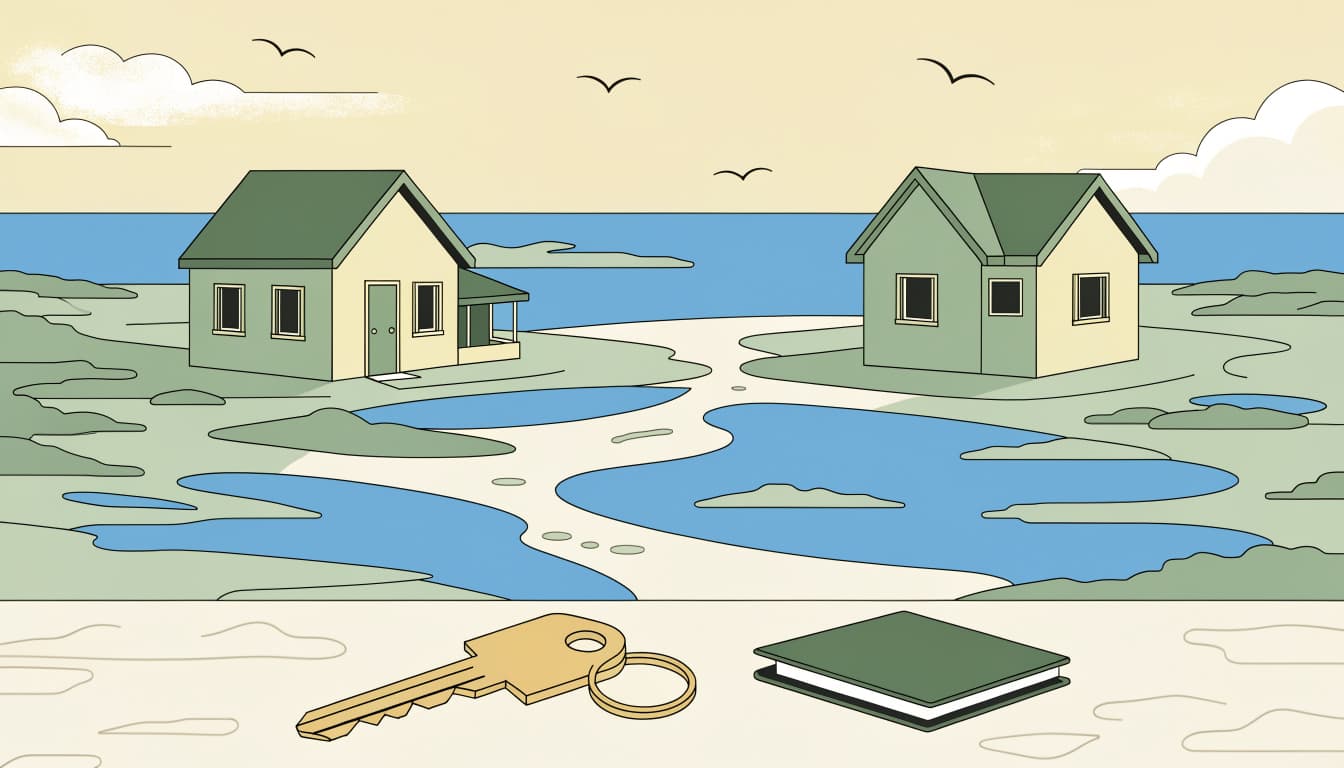
Moving to another Florida home requires a new homestead application. Portability may also preserve part of the assessment benefit accumulated at your previous home.
Transfer the assessment difference, not the exemption
Save Our Homes can create a difference between a property's market value and assessed value. Portability allows eligible homeowners to transfer some or all of that difference to another Florida homestead.
The maximum transferable assessment benefit is $500,000 . The amount available depends on the previous benefit and the relative values of the old and new homes. Moving to a lower-value home generally produces a proportional transfer.
Portability transfers an assessment benefit, not a dollar-for-dollar tax credit or the old home's tax bill.
It also doesn't transfer a residency exemption from another state.
Submit a separate portability application
Use Form DR-501T, Transfer of Homestead Assessment Difference , alongside the new home's DR-501 application. Provide the previous property's address, parcel information, and the year you last received homestead there.
Timing involves assessment years, rather than simply counting months after closing. Miami-Dade County Property Appraiser guidance describes eligibility as establishing the new homestead within three assessment years after abandoning the previous one.
Co-ownership, divorce, or dividing a prior homestead benefit can require additional documentation. Keep both properties' assessment records and the portability decision with your application file.
Keep homestead separate from federal and business taxes
Florida's homestead exemption is local property-tax relief. It isn't a federal income-tax deduction, and claiming it doesn't automatically reduce your federal return.
The IRS generally permits qualifying real estate taxes as an itemized deduction, subject to applicable limits. Its real estate tax guidance distinguishes eligible property taxes from other homeownership expenses.
Business owners should also separate homestead from Florida's tangible personal property rules. The $25,000 TPP exemption concerns qualifying business equipment and other taxable business assets, not the residence's homestead exemption. Form DR-405 is a separate filing from DR-501.
If you work at home, federal deduction rules create another separate analysis. Our guide to home office deductions for self-employed owners explains the regular-use and exclusive-use requirements.
Keeping these benefits separate prevents a property-tax approval from becoming an unsupported income-tax deduction.
Frequently asked questions
Do I need to apply again every year?
Homestead exemptions generally renew automatically while you remain eligible. However, notify the property appraiser when circumstances change, including a sale, a change in permanent residence, or rental activity that affects eligibility.
A renewed exemption doesn't establish that every later use of the home remains eligible. Keep your mailing address current so exemption notices reach you.
What happens if I miss March 1?
Florida allows a limited late-filing process, but approval isn't automatic. Submit the application promptly and provide the explanation and supporting information required for your circumstances.
A late application or denial may require a Value Adjustment Board petition. There isn't one universal late-filing date to rely on statewide, and the regular March 1 deadline remains the safest filing target.
Put the exemption in place before tax bills arrive
The Florida homestead exemption starts with January 1 eligibility and a timely application through your county property appraiser. Complete records help establish ownership, permanent residence, and any portability claim.
Retain your filing confirmation and follow the application through a decision. When you move, treat the new exemption and portability request as separate tasks so available benefits don't get lost between properties.